“Financial Times”: Claudio Descalzi on Eni’s role in the energy transition
In an interview with the “Financial Times”, CEO Claudio Descalzi discussed Eni’s strategic evolution and the global energy outlook. Reflecting on his career and the milestones that have defined his leadership, he highlighted the Group’s ongoing transformation. He also emphasized how Eni is adapting to complex market demands by integrating traditional assets with innovative, sustainable solutions. Ultimately, he reinforced his vision of the Group as a flexible leader in the energy sector.
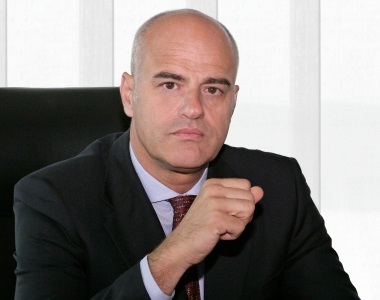
Claudio Descalzi shares his experience at the helm of Eni
“You need to continuously evolve mentally to manage yourself, your team, and your company’s future”. In a conversation with the “Financial Times”, CEO Claudio Descalzi reflected on his professional trajectory and the milestones that defined his tenure at Eni. The CEO explored the Group’s long-term strategy and the broader global energy outlook, asserting that personal growth and relentless innovation remain the primary tools for navigating complex landscapes. Throughout the interview, he emphasized that a successful energy transition is inherently tied to a diversified supply chain capable of meeting a rising global demand. Consequently, Eni pivoted toward cutting-edge technology and a broad energy mix to spearhead this shift. Looking back, Claudio Descalzi’s corporate vision is informed by a unique career path: a physicist by training, he honed his leadership skills within high-stakes environments in Libya, in Congo, and Nigeria. These years taught him that succeeding in the energy sector demands far more than technical expertise – it requires deep human resilience and cultural adaptability. Significantly, he noted that he began contemplating these strategic challenges well before the 2015 Paris Agreement, developing the roadmap that today guides Eni. Furthermore, while addressing the urgency of climate change, he offered a pragmatic warning: “Europe thinks the world is like Europe. But it is not”. By highlighting that Europe represents only 5% of the global population, the CEO underscored that the transition has to be managed through context-specific approaches, recognizing that different regions face different economic and social realities.
Claudio Descalzi: a balanced approach to managing energy challenges
Continuing his dialogue with the “Financial Times”, Claudio Descalzi observed that “you need to change your skin, muscles, skeleton, and bones”, adding that a leader must also “continuously evolve mentally to manage yourself, your team, and your company’s future”. He explained that this adaptability is crucial, as the energy sector alternates between periods of long-term stability and volatile shocks. Such unpredictability makes diversification vital, and the CEO noted that the energy transition has been extremely useful in forcing Eni to reinvent itself. A further detail highlighted was the CEO’s distinctive approach, which set him apart from industry standard models. While many competitors opted for M&A and cost-cutting, Eni chose a different path by boosting R&D, commissioning a state-of-the-art supercomputer, and recruiting researchers. Furthermore, while others favored outsourcing, Eni brought specialized skills back in-house and doubled down on exploration. The interview also illustrated how Claudio Descalzi steered Eni through the Covid-19 pandemic and geopolitical instability: he merged future-oriented businesses, such as biorefineries, with assets like service stations, resulting in profitable, ESG-friendly units. Finally, he shared a glimpse into his daily routine, noting that he usually wakes at 5:00 or 6:00 AM to read the latest news: staying informed on global geopolitics – not just energy – remains essential for maintaining a broad vision. This discipline underscores the CEO’s ability to lead Eni toward an energy future defined by new challenges and a deep comprehension of global events, all while adapting to the industry’s shifting landscape.